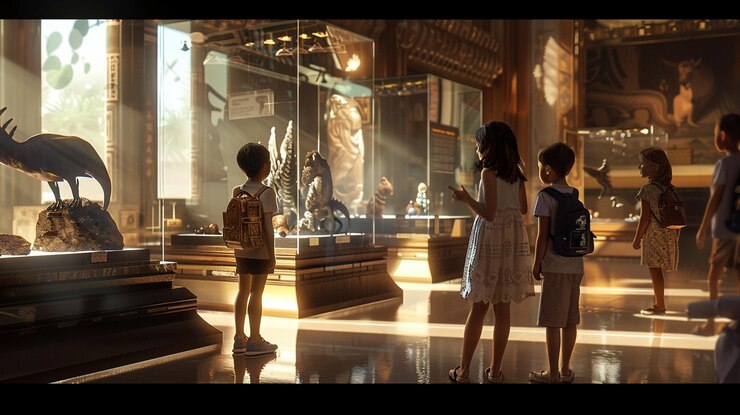
Humanity has always been fascinated by how their ancestors have expressed themselves in the medium of ancient art. On the other hand, Ancient Artz takes a look at the interesting world of prehistoric paintings, sculptures, and other artifacts that leave us modern artists and historians intrigued. In this blog post, this is the discussion of the importance of ancient artz, how it was developed, and its influence on culture that persists even to today.
The Origins of Ancient Artz
Human expression through art is something that has never gone out of style since prehistoric times. The cave paintings of Lascaux in France, a selection of its petroglyphs, and the petroglyphs of Africa all demonstrate how early humans attached storytelling and spiritual significance to their artistic expression. Early civilization’s connection to nature is depicted through these artworks which are focused on hunting scenes, celestial symbols, and deities.
The Influence of Ancient Artz on Modern Culture
The story of ancient artz goes on beyond museums. Modern artists use the simplicity, symbolism, and techniques from ancient artwork to draw inspiration. As early as the geometric patterns in Mesopotamian pottery, up to the realism of Greek sculptures, these artistic achievements from the early times still stand as a good reference to current aesthetics. Moreover, ancient motifs are widely used by modern digital artists and graphic designers to connect the ancient with the present.
Famous Ancient Artz Forms Across Civilizations
1. Ancient Egyptian art; was well known for its wonderful hieroglyphics, its magnificent pyramids, and its precise paintings found in tombs, all of which represented power, religion, and the hereafter.
2. Greek and Roman Art; It included stunning sculptures, frescoes, and architectural marvels such as the Parthenon featuring themes of beauty, realism, and storytelling.
3. Asian Art; covers a broad range of studying Chinese calligraphy, Japanese ukiyo-e, employment of illusion in Indian temple carvings, and other examples of spirituality, nature, and cultural heritage.
4. Indigenous Art; Art Form of Indigenous Peoples – Myths, prescriptions, traditions, and ancestral wisdom were conveyed via symbolic patterns, as well as natural elements, in art forms of Native American, Aboriginal, and African tribal forms.
The Role of Mythology in Ancient Art
The fact is that many ancient artworks were closely related to mythology and religious beliefs. Tales of gods and heroes were depicted in Greek vases, while Hindu temple carvings illustrated tales of the Ramayana and Mahabharata. Art and mythology served as a way to connect both communal and personal beliefs through the relationship that is reviewed. They were a central way to transfer moral lessons, beliefs, and values from one generation to the next.
Symbolism in Ancient Artz
Many times, when ancient artists created artwork, they included symbolic elements as a way to deliver more to the audience. The Egyptian ankh symbol stood for eternal life, while the Celtic knotwork meant infinity and being connected. These symbols help us to decode the messages and the intentions of the creators of certain ancient masterpieces.
The Evolution of Ancient Artz Through the Ages
Artistic expression followed with civilizations. Beginning in the early cave paintings, through to the grand frescoes of the Renaissance, ancient art has taken many different forms by later combining new techniques and styles with new materials. The progression of art does occur along with cultural changes, technological inventions and never ceasing desire for creativity.
Preserving Ancient Artz for Future Generations
Given that modernization and environmental fortunes make ancient artworks extinct, preservation efforts have never been more crucial. These invaluable cultural assets are restored and protected by archaeologists and historians with advanced technology such as 3D scanning and AI construction. Similarly, museums and institutions hold great importance in their role in educating the public as to why ancient art is so important and how their legacy can indeed endure.
Why Ancient Artz Still Matters Today
The complicacy of the subject is just how crucial the study of ancient art is for understanding human history and cultural evolution. These masterpieces are preserved and interpreted by museums throughout the world in universities and by historians. Appreciating ancient art not only honors our ancestors, but it also gives us an insight into the ageless idea of artistic expression.
Conclusion
Ancient Artz is a living testament of human creativity and resilience instead of simple relics of the past. Of course, there’s no end to knowledge and inspiration for the artist, the historian, or any art enthusiast, from the ancient ways of the art world. Their exploration and preservation ensure that the artistic heritage of this ancient civilization will be available for generations to come.