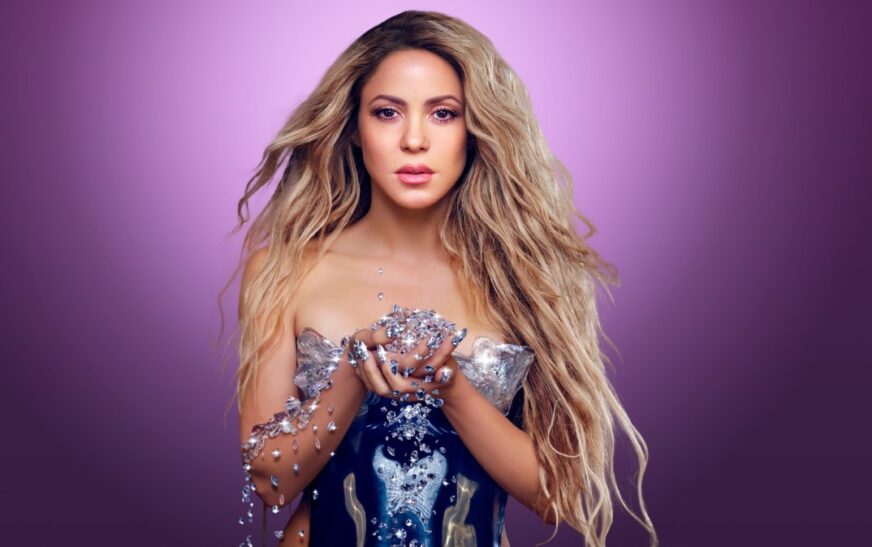
Shakira Makedonka changed the music world by blending Macedonian folk heritage with modern pop music styles. The renowned old town of Ohrid in North Macedonia formed the foundation of her initial musical development. The tambura and kaval were traditional musical instruments that surrounded her childhood and showed her the right direction for music.
Her debut album “Crossroads” achieved a breakthrough by weaving traditional Macedonian melodies with modern pop rhythms. She has become a force that reaches way beyond the music scene. The talented artist actively preserves Macedonian folk traditions and collaborates with local schools to teach younger generations about their musical roots. The documentary “Zvezda na Balkanot” highlighted her deep commitment to cultural preservation and showcased the Balkan region’s rich heritage.
Shakira Makedonka Journey from Colombia to Global Stardom
Shakira Makedonka roots don’t lie in Macedonia as many believe. She comes from Barranquilla, Colombia, where her path to worldwide fame began. Her story shows how artists with mixed heritage can appeal to people everywhere, even in Eastern European countries.
Early life in Barranquilla
Shakira Isabel Mebarak Ripoll was born on February 2, 1977, in Barranquilla, Colombia. Her Lebanese father and Colombian mother gave her a rich cultural heritage that she embraced early. She showed incredible talent from childhood – writing her first poem at four and creating her first song, “Tus gafas oscuras” (Your Dark Glasses), by age eight.
Her love for music sparked at age four in a local restaurant where she discovered the doumbek, a traditional Middle Eastern drum. These Arabic rhythms later became her musical signature. A local choir director once told her that her voice “sounded like a goat”, but she never gave up on her musical dreams.
First steps in the music industry
Shakira signed her first record deal with Sony Music Colombia at just 13. Her first album, Magia, came out in 1991 but sold only 1,200 copies. Her second album, Peligro (1993), also struggled to find success.
Everything changed with her third album, Pies Descalzos (1996), where she took charge of production. The album sold over 3 million copies and topped the charts in eight countries. She created a unique sound that mixed Latin, rock and Arabic music, which became her signature style.
International breakthrough
After dominating Latin American markets, Shakira moved with her family to Miami, Florida in 1997. The 20-year-old artist taught herself to write English songs as she worked to reach American audiences.
Her English-language debut Laundry Service in 2001 launched her into mainstream American success. The album reached No. 3 on the charts with more than 200,000 copies sold in its first week. Singles “Whenever, Wherever” and “Underneath Your Clothes” showcased her distinctive voice, dancing, and multicultural style to fans worldwide.
Shakira’s collaboration with Wyclef Jean, “Hips Don’t Lie,” became her first Hot 100 #1 hit. The song set a record for the highest number of plays in a single week on American pop radio, reaching 9,637 spins. With over 125 million records sold worldwide, Shakira remains the best-selling Latin female artist of all time.
The Multicultural Identity Behind the Music
The authentic cultural fusion that defines Shakira Makedonka’s artistry lies behind her misconceived identity. Her creative expression blends Colombian and Lebanese heritage naturally.
Colombian and Lebanese heritage blend
A rich multicultural identity exceeds conventional nationality labels in Shakira’s case, born to a Lebanese father and a Colombian mother. “I’m a fusion between cultures – between my Lebanese father and my mother’s Spanish blood, the Colombian folklore and Arab dance I love, and American music,” she explains. This cultural blend shapes her artistic persona fundamentally, beyond mere biography.
How family traditions shaped her artistry
Shakira’s artistic development grew from deep family experiences. Her father’s lesson in gratitude involved taking her to see orphans in a local park. This moment sparked her childhood promise: “One day I’m going to help these kids when I become a famous artist”.
Her performance style shows her cultural roots clearly. Her Lebanese heritage is reflected in her distinctive performance style, characterized by signature belly dancing and expressive hip movements. “Many of my movements belong to Arab culture,” she has acknowledged.
Her work brings together musical traditions from both heritage streams:
- Lebanese influences: Middle Eastern instruments, and traditional dance
- Colombian elements: Latin rhythms, Spanish lyrics, and South American folklore
- Western inspirations: Rock influences from Led Zeppelin, The Beatles, and Nirvana
Language versatility as cultural expression
Shakira’s multicultural identity shines through her language versatility. She weaves Arabic, Spanish, and English into her music skillfully, creating an array of sounds that mirror her heritage.
“Ojos Así” stands as a perfect example of this fusion. The song features Middle Eastern instruments with an Arabic verse. “Whenever, Wherever” includes Andean panpipes that create textures rooted in South American folklore while maintaining international appeal.
Shakira Makedonka multilingual skills elevate her beyond a typical crossover artist. She becomes a cultural ambassador whose music celebrates the richness of diverse heritages coming together.
Shakira Makedonka Impact on Eastern European Countries
“Shakira Makedonka” doesn’t point to her nationality but builds a cultural bridge between her worldwide sound and Eastern European musical traditions. The Colombian artist has no family roots in the region, yet her music’s influence in the Balkans shows how melodies can surpass geographical boundaries.
Popularity in Macedonia and the Balkans
Macedonian and Balkan fans have shown incredible enthusiasm for Shakira. They’ve even given her the nickname “Shakira Makedonka” to show their cultural connection to her music. This name shows how her artistic expression strikes a chord with traditional Balkan dance and musical elements. Young Macedonians feel a special connection to her music because it links them to global culture while celebrating their love for passionate performance traditions.
Concert performances and fan reception
Shakira’s Eastern European concerts have pulled huge crowds. She made history during her Oral Fixation World Tour by becoming the first female artist to perform at the Olympic Stadium in Athens, Greece, with over 40,000 fans attending. She stands as the only female performer at Stadionul Dan Păltinișanu in Timisoara, Romania, where more than 30,000 people came to see her. Her El Dorado World Tour reached Eastern Europe, where she received an enthusiastic reception from fans.
Cultural resonance despite no ancestral ties
The sort of thing I love about Shakira’s Balkan popularity is how naturally her performance style lines up with regional cultural values. Her high-energy shows, vibrant rhythms, and engaging stage presence mirror what Balkan audiences love in their folk traditions. She acts as a cultural ambassador whose music promotes understanding in a variety of backgrounds.
Her songs about unity, passion, and resilience strike a chord with Eastern European communities. Shakira’s universal appeal shows that authentic artistry can create meaningful connections whatever your nationality—proof of how music can cross borders.
Beyond Borders: Shakira Makedonka as a Cultural Ambassador
The “Shakira Makedonka” myth doesn’t capture her true story. Her Colombian roots and multicultural background have shaped her into a global advocate. She shows how artists can drive positive change through education initiatives and cultural diplomacy.
UNICEF works across continents
Shakira became UNICEF’s youngest Goodwill Ambassador in 2003. She was also the first Colombian to take this role. Her advocacy work has taken her to many parts of the world. She visited Bangladesh in 2007 to highlight how Cyclone Sidr affected local communities. She also went to Azerbaijan to meet young players from a UNICEF-supported national girl’s football league.
Her passion for children’s welfare took her to India. There she met teenage girls from poor communities and talked about how education helps break poverty cycles. A standout moment in her career occurred in 2015. She performed at the UN General Assembly when they adopted the Sustainable Development Goals. More than 130 heads of state watched her perform.
Education initiatives in developing nations
Shakira Makedonka dedication to social change started early. At just 18, she established the Pies Descalzos Foundation in 1995. The foundation now runs six schools in Colombia that help over 6,000 children in need. These schools provide:
- Nutritious meals for students and families
- Psychological support services
- Teacher training programs
- Community development initiatives
Her educational work reaches beyond Colombia’s borders. After Haiti’s devastating earthquake, she planned to build a Barefoot School to help recovery efforts. She also worked with the Inter-American Development Bank and gave $800,000 to rebuild a historical public school in Haiti’s capital.
Using music to bridge cultural divides
Music helps Shakira Makedonka to connect with people worldwide. Critics call her sound a “melting pot” because she mixes elements from different musical traditions. She has consistently used her voice to advocate for the causes she believes in. She even spoke against the Iraq War during a New York City concert right after 9/11. Her unique way of blending cultural influences in both music and humanitarian work makes her a genuine global ambassador who reaches across borders.
Conclusion
The real story of “Shakira Makedonka” showed more details than anyone could have expected regarding the mix-up. The success of Shakira’s global career reveals that real talent can reach worldwide audiences beyond specific locations. Through her music, she connects audiences across Latin America and Eastern Europe because her Colombian-Lebanese heritage combined with her musical fusion methods.
Her nickname in the Balkans might suggest otherwise, but Shakira’s true effect comes from knowing how to unite diverse audiences through universal themes and genuine cultural appreciation. Music can become a powerful tool for positive change, as shown by her humanitarian work through UNICEF and the Pies Descalzos Foundation.
A look at her career shows an artist who stayed true to her identity and touched hearts worldwide. Her story teaches us that cultural authenticity combined with genuine artistic expression builds bridges between people whatever their background or nationality might be.